Be Like Winnie, Health Tip by Carla

Be Like Winnie, Health Tip by Carla

Be Like Winnie

Winnie has experienced fatigue, irritability, increased thirst, and urination lately. She was known for her amazing baked goods. During the holidays, everyone gathered at her house for delicious meals, including cakes, pies, and other delicacies. She found that when she was sad or stressed, eating something sweet made her feel better. Eating sugar and other refined carbohydrates releases dopamine in the brain. This is the pleasure hormone. The more that is released, the more pleasure you experience. As your dopamine levels drop, you start craving more simple carbohydrates to boost them, creating a feedback loop.

According to psychologist Amy Johnson, when you feel bad, you will do anything to make yourself feel better. Some of these actions are not the healthiest choices we could make, but we do the best we can, given the knowledge and our thinking at that moment. When we know better, we do better. Winnie had been using a highly refined carbohydrate diet as a coping mechanism.

Winnie’s foot became red, hot, and swollen about a week before Christmas. She was too busy to deal with it, but soon it became so painful she couldn’t get her shoe on. She went to see her doctor, who ran tests and informed her that she had diabetes. Her blood sugar was 350. He informed her that this elevated sugar was not a sudden onset; she had been progressing to diabetes over time. If she did not do something about it, she would lose her foot. He put her on insulin and an oral medication and gave her a diet to follow. He reassured her that if she changed her lifestyle, then her diabetes would improve. Now she knew better!

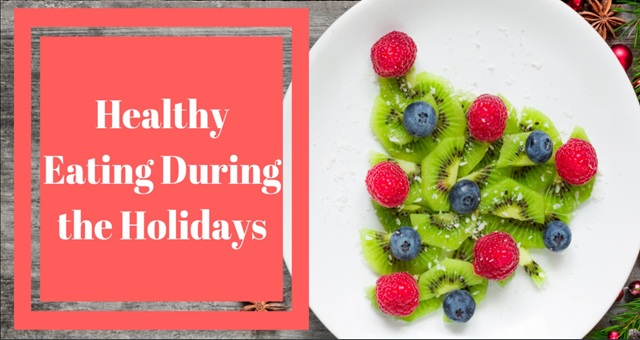
She changed her diet to focus on lean meats, vegetables, legumes, and nuts. She allowed herself 1 or 2 servings of a whole grain a day. If she wanted something sweet, she would have a piece of fruit. She increased her activity through walking and gardening. She managed her stress through crocheting beautiful lace projects.

Soon, her infection cleared, her outlook brightened, and she lost significant weight. After a year, she was off her insulin and managed her diabetes with one pill a day and her new lifestyle.

As we move from 2025 to 2026, let’s be like Winnie. Most chronic health problems can be prevented, managed, and improved through lifestyle tweaks. Palo Pinto General Hospital has resources such as nutrition education and lifestyle coaching to help you. Discuss these with your provider.
 

Reflections on Age as Just a Number

Reflections on Age as Just a Number


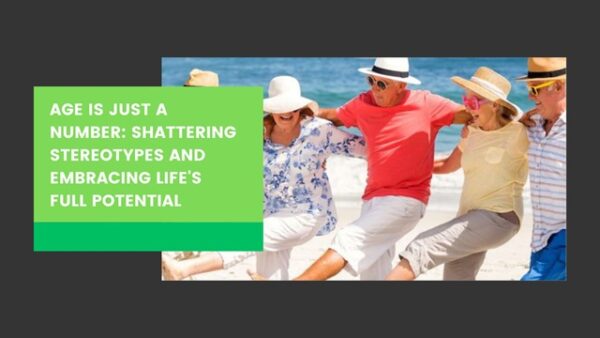
Age is Just a Number: Get Rid of Stereotypes and Embrace Life’s Full Potential

A young lady said something to me a while ago, and it stayed with me. She said that I “don’t act like an 81-year-old”. We had been laughing a lot while engaging in conversation about many experiences of our past.  I never thought about what I was supposed to ACT like. I have moved a lot slower and more slowly and painfully this past year with the onset of some medical issues, and I seemed old to myself in that case.

I came home and started to reflect on her comment

There’s a phrase whispered like a mantra throughout our lives: “Age is just a number.” But how often do we genuinely internalize its meaning? We watch time march on, counting birthdays like milestones on a dusty road, often associating them with limitations and decline. We start to feel our bodies seemingly wear down.

But what if age, that seemingly linear progression, is instead a mosaic? A vibrant collage of experiences, wisdom, and potential, far richer and more dynamic than a single number can represent.

In truth, the statistics paint a compelling picture. Forget the image of the forgetful grandparent struggling with technology. Consider Johannes Mallow, the 48-year-old world memory champion, or the countless older adults mastering new languages with impressive fluency. Studies even show our brains retain their remarkable plasticity, the ability to adapt and form new connections, throughout our lifespan. I reflected on how sharp my colleagues were in our Wednesday afternoon Poker Club in my former neighborhood. We never focused on age and its problems, but rather joked and laughed a lot. Even though it was a nickel, dime, and quarter game, our card-playing skills were pretty awesome ~~smile. By the way, the average age was 84.

Our physical ability, too, can defy expectations. Marathon legends like Fauja Singh, who tackled the London Marathon at 100, are testaments to the human spirit’s enduring strength. And Ernestine Shepherd, who became the world’s oldest competitive bodybuilder at 86, proves that physical peak performance can blossom even in life’s later chapters.

The world of innovation and achievement follows suit. While we often glorify youthful entrepreneurship, the average age of successful startup founders sits closer to 40 than 25. Experience, it seems, trumps youthful energy when building high-impact companies. And let’s not forget the late Bloomers, individuals who find their creative voice or professional calling later in life. Helen Frankenthaler, who redefined abstract expressionism at 50, is a powerful example.

Even happiness, that elusive butterfly, seems to take flight with age. A study in the Proceedings of the National Academy of Sciences revealed that people over 85 reported higher levels of life satisfaction than their younger counterparts. Perhaps wisdom’s gentle hand helps us understand what truly matters and appreciate the richness of each passing moment.

But these statistics are merely stepping stones to embracing the “Age is Just a Number” philosophy. It’s about dismantling the ageist narratives that infiltrate our society, from hiring practices based on arbitrary dates to the limiting expectations we place on ourselves and others.

It’s about recognizing that a 25-year-old can be a seasoned artist, a 60-year-old can still be an agile athlete, and an 80-year-old can be a tech-savvy entrepreneur. It’s about understanding that potential knows no age, and limitations are often self-imposed.

So, how do we genuinely internalize this transformative message? It starts with a shift in perspective. Let’s view age as a spectrum, not a rigid ladder. Let’s celebrate the wisdom gained with each passing year while nurturing the curiosity and spirit of adventure within us all. Let’s champion lifelong learning, embrace new challenges, and redefine what it means to “age gracefully.”

Most importantly, let’s replace the tired figure of decline with the vibrant narrative of continuous growth, boundless potential, and a life that explodes in color and possibility, regardless of the number on the calendar.

Because, my friends, age is just a number. It’s time we started living like it. And I am relishing my 8th Decade of Creating, Sharing, and generally being Happy

Share your Experiences Below

**The article above was posted a while ago on the Blog of one of our regular Senior participants at Mineral Wells Senior Center, Chuck Bartok 

The Heart of Rural Health

The Heart of Rural Health

Palo Pinto County has been a Rural Health Champion of the NRHA since 1970, when Palo Pinto General Hospital and its associated hospital district were established.

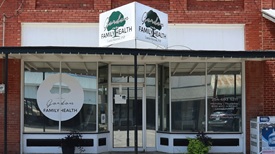
In 1992, Carla Hay and Glenda Pruitt established a rural health clinic in southern Palo Pinto County.Gordon Family Health Harold Burgett transformed an old feed store in Gordon, Texas, into a doctor’s office.  Palo Pinto General Hospital (PPGH) rented this space for a home health office. They offered the front area for the clinic. Funding for the clinic was provided by a Rural Health Initiatives grant.  The Palo Pinto Rural Health Clinic opened in 1993. In 1995, PPGH purchased the clinic. Carla served as the nurse practitioner there, while Glenda went on to establish the West Town Clinic and Possum Kingdom Rural Health Clinic.


Currently, PPGH operates 5 rural health clinics.  We have two pediatricians, two family physicians, and 14 excellent nurse practitioners. There are also several nurse practitioners (NPs) in private practice in Mineral Wells.

Nurse Practitioners are registered nurses (RNs) who have completed advanced training through a master’s or doctoral program. The curriculum is established by the State Board of Nursing.  In Palo Pinto County, the practitioners are Family Nurse Practitioners. The curriculum includes advanced assessment, advanced pathophysiology, advanced pharmacology, primary care for families, pediatric and adolescent care, psychiatry, women’s health, and prevention and population health.

They are required to have a minimum of 500 clinical hours under the direct supervision of a nurse practitioner or physician. They are trained to assess, diagnose, and treat a wide range of conditions, order laboratory and X-ray tests, interpret results, and prescribe medications.  The Nurse Practitioner must pass a national board certification examination in their specialty before obtaining a license from the State Board of Nursing.

Nurse Practitioners practice independently in 27 states. In Texas, NPs must establish a collaborative agreement with a physician to gain prescriptive authority. These physicians play a crucial role, providing consultation on complex patient cases and reviewing a percentage of charts to ensure quality and uphold evidence-based practices.

NPs provide patient-centered care with a strong emphasis on health education, preventative care, and a holistic approach to wellness, which leads to better health outcomes and higher patient satisfaction. They are skilled collaborators who work with their supervising physician and other healthcare professionals to create comprehensive treatment plans and are truly a valuable asset to Rural Health.

We have three doctors retiring from practice, which affects many of our seniors.  We are increasingly utilizing nurse practitioners. Many seniors are reluctant to use NPs as their providers. Hopefully, this will reassure that Nurse Practitioners are competent providers.

Pin It on Pinterest

Verified by MonsterInsights