Healthy Habit 7: Supplementing Wisely for the Aging Body
Sometimes even the best diet needs backup. This habit helps you make sense of supplements, what’s worth considering, what to skip, and how to use nutrients intelligently to fill in the gaps your body develops over time.
As you move through midlife and into the senior years, your body’s ability to absorb and produce certain nutrients naturally changes. Digestion may slow, and nutrient absorption becomes less efficient than it once was. This is where supplements can play a supportive role, but they aren’t a magic fix or a one-size-fits-all solution. More is not always better.
Supplements should complement your healthy lifestyle, not replace it. Whole foods, movement, and stress management remain the foundation of well-being. Still, for many people over 55, thoughtful supplementation bridges nutritional gaps, supports energy levels, and enhances overall resilience.
What Changes with Nutrient Absorption?
As your body changes, so does its ability to handle key nutrients. For many, stomach acid production naturally declines with age, making it more difficult to absorb vitamins and minerals such as B12, iron, calcium, and magnesium. Hormonal shifts can also affect how your body uses calcium and vitamin D, two nutrients essential for bone health and overall vitality.
Certain medications, such as acid reducers or blood pressure medications, may further interfere with nutrient absorption or increase the need for specific minerals. Even small dietary shifts, such as reducing your intake of red meat or dairy, can lower your consumption of essential micronutrients.
This is why personalized nutrition becomes more important over time. Understanding what your body needs and where it may require extra support, you make informed, intentional choices.
Smart Supplements to Consider (With Medical Guidance)
Every body is unique, and supplement needs vary based on your diet, health history, and lab results. Always check with your healthcare provider before adding anything new. With that said, certain supplements are commonly helpful for adults over 45.
Vitamin D3 supports bone health, immune function, and mood, especially for those who spend limited time in sunlight. Magnesium calms the nervous system, promotes better sleep, and eases muscle tension. Omega-3 fatty acids (EPA and DHA) help reduce inflammation and support brain, heart, and joint health.
Vitamin B12 becomes more difficult to absorb with age, yet it’s essential for energy production and cognitive clarity. Collagen or protein powders can help support joint health, skin elasticity, and muscle repair, especially when combined with resistance training. And probiotics may improve digestion and immune function by maintaining a healthy balance of gut bacteria.
Other supportive additions may include Calcium for bone density, Turmeric and curcumin for inflammation, and adaptogenic herbs such as Ashwagandha and Rhodiola for stress resilience and energy balance.
The key is personalization. Your supplement routine should be tailored to your unique needs, rather than relying on a generic checklist or marketing claims.
Tips for Choosing Quality Supplements
With numerous products available, choosing wisely is crucial. Look for third-party testing from reputable organizations, such as NSF, USP, or ConsumerLab, to ensure quality and purity. Choose reputable brands that are transparent about their sourcing, manufacturing practices, and ingredient lists.
Be cautious of supplements that promise miracle results or include long lists of ingredients in undisclosed amounts. Avoid unnecessary additives such as artificial colors, fillers, and synthetic preservatives whenever possible.
Storage conditions matter — Many vitamins degrade with excess heat, light exposure, or humidity over time. Check labels for recommended storage (e.g., a cool, dry place) and expiration dates to maximize potency during use.
A high-quality supplement should feel like gentle, steady support for your body, not an overwhelming mix of promises or confusion.
Supplements as Support, Not Substitutes
Remember, supplements are just that, supplemental. They work best as part of a balanced approach that includes nourishing foods, regular physical activity, adequate sleep, and stress management.
When chosen wisely and used intentionally, supplements can help your body adapt to change more effectively. They can support your energy, clarity, and resilience, helping you age with strength and ease.
Always approach supplementation as an act of care, guided by knowledge and compassion for your body’s evolving needs.
Try This Today:
Check your current supplements or vitamins.
Do you know why you take each one?
If not, jot down questions to ask your doctor.
Knowledge turns routine into self-care.
Are you taking any supplements, and are they effective?
Share your experiences below


Healthy Habit 6: Eating to Support the Aging Body
Food becomes more than fuel as we age; it’s medicine, comfort, and energy in one. In this section, you’ll explore how eating in alignment with your body’s evolving needs supports muscle, digestion, and vitality without adhering to rules or restrictions.
Your body’s nutritional needs naturally evolve with age. Digestion can slow, nutrient absorption may shift, and maintaining muscle mass often requires more intentional effort. Inflammation also becomes a more pressing concern, influencing everything from joint comfort to energy levels.
But this stage of life brings something beautiful too. Clarity!
You’ve learned what foods make you feel your best, what truly fuels your energy, and what habits sustain your well-being. Eating well at this point isn’t about restriction or rules; it’s about nourishment, energy, and enjoyment in equal measures. There’s no need for suffering.
Nutritional Priorities for 45+
As your metabolism and physiology change, your nutritional focus should shift from quantity to quality. You may need fewer total calories, but your body still needs abundant nutrients to thrive.
Protein becomes especially important for preserving lean muscle mass, supporting recovery after activity, and keeping your metabolism strong. Make room for high-quality sources of protein, such as eggs, fish, poultry, beans, or tofu, throughout your day, not just at dinner.
Fiber supports digestion, regulates blood sugar, and keeps your heart healthy. You can find it in fruits, vegetables, legumes, and whole grains. Many people benefit from gradually increasing fiber intake while staying hydrated to prevent discomfort.
Healthy fats are essential for brain function and hormonal balance. Choose fruit like avocados, nuts, seeds, and olive oil to keep your mind sharp and your mood steady.
Complex carbohydrates, such as sweet potatoes, quinoa, oats, and brown rice, provide steady energy without the crashes that refined carbohydrates can cause. These nutrient-dense carbs are the fuel your body uses most efficiently.
And don’t forget your micronutrients. Vitamins and minerals like calcium, magnesium, vitamin D, B12, and potassium all play critical roles in maintaining bone strength, nerve function, and muscle coordination. Pay special attention to B12 and D, which are harder to absorb with age.
Anti-Inflammatory Eating Patterns
Chronic inflammation is one of the body’s biggest disruptors as you age, contributing to joint pain, heart disease, arthritis, and even cognitive decline. Fortunately, food is one of your most powerful tools for calming inflammation and restoring balance.
Build your plate around colorful, nutrient-rich foods. Brightly hued vegetables and fruits provide antioxidants that help protect against cellular damage. Leafy greens and cruciferous vegetables, such as kale, broccoli, and cabbage, help the body detoxify naturally. Fatty fish, such as salmon and sardines, provide omega-3s that help soothe inflammation and support brain health.
You can also add nuts, seeds, and olive oil for healthy fats, and enhance flavor with herbs and spices like turmeric, ginger, garlic, and cinnamon, all of which contain natural anti-inflammatory compounds.
At the same time, try to minimize foods that promote inflammation, such as processed snacks, refined sugars, trans fats, highly processed oils, and excessive alcohol. Perfection isn’t necessary, but awareness is powerful. Every meal is a chance to stack the deck in your favor and nurture your long-term healthy habits.
Hydration and Digestion
Hydration is one of the most overlooked aspects of healthy aging. As you get older, your thirst signals become less noticeable, but your body’s need for water never diminishes. Staying hydrated supports joint lubrication, skin elasticity, energy, and detoxification.
Plain water is best, but herbal teas, soups, and water-rich foods like cucumbers, citrus fruits, and melons also contribute to your daily intake. Those of us near Mineral Wells, Texas, have the advantage of easily accessing Crazy Water from the Famous Water Company
To support digestion, incorporate probiotic-rich foods like yogurt, kefir, sauerkraut, and miso to nourish the beneficial bacteria in your gut. Pair these with prebiotic fibers from onions, leeks, asparagus, and bananas, which feed the good bacteria and keep your digestive system balanced.
Finally, practice mindful eating. Slow down. Savor your meals. Chew thoroughly and avoid multitasking while eating. When you give your body the time and attention it deserves, digestion becomes smoother and more efficient.
Food as a Daily Act of Care
Nourishing your body in midlife isn’t about perfection but about presence. It’s the ongoing act of honoring what your body needs today, not what worked ten or twenty years ago. Eating each meal is an opportunity to support your health, restore your energy, and celebrate your body’s incredible ability to adapt and thrive.
When you eat with care, you don’t just feed your body, you nurture your future self. Strength, grace, and vitality all begin at the table.
Reflection:
Think of one meal that truly nourished you, not just filled you.
What made it feel good? More flavor? Better company? Fresh ingredients?
Recreate that feeling once this week.
Share your experiences and hacks in the comments below

Also, before you go, please consider helping us continue to grow

Healthy Habit 5: Sleep as a Strategy, Not a Struggle
Sleep is the silent architect of healing and renewal. You’ll learn to turn rest into a strategy rather than a nightly battle, exploring small shifts that restore deep, restorative sleep and help you wake feeling grounded, clear, and capable.
Sleep is not just a useless pause in your day. This Healthy Habit is the foundation that enables everything else to function properly. It’s when your body rests, restores, and repairs itself. While you sleep, your brain organizes memories, your muscles recover, and your immune system resets. Yet for many people, especially as the years pass, sleep becomes increasingly elusive.
Hormonal changes, stress, medications, and shifting routines can all interrupt your natural rhythms. However, with gentle intention and a few mindful adjustments, you can start to reclaim restful, nourishing sleep and treat it as one of the most powerful tools for your well-being.
How Sleep Changes with Age
As you move through midlife and beyond, you may notice that your sleep feels lighter or less continuous. You might wake more often, take longer to fall asleep, or find that you wake earlier than you’d like. Deep, restorative sleep, often called “slow-wave sleep,” naturally becomes shorter over time.
These changes are common, but they don’t have to define your nights. By paying attention to your habits, environment, and stress levels, you can support your body’s natural ability to rest deeply and wake feeling renewed.
Creating a Restful Sleep Environment
Think of your bedroom as a sanctuary that gently signals to your body that it’s safe to let go. Start by cooling the room to around 60–67°F, which helps your body transition into sleep. In the evening, dim the lights and step away from screens, or use blue-light filters if needed.
Soothing sounds, such as white noise or soft music, can quiet your mind, while calming scents like lavender or cedarwood oil can invite relaxation. Invest in comfort where it counts: a supportive mattress, breathable sheets, and pillows that cradle your neck. You want to create a space that feels peaceful, cozy, and uncluttered, a place where your body loves to rest.
Gentle Practices to Support Sleep
Evening rituals are one of the kindest gifts you can give yourself. Try gentle stretching, journaling your thoughts, or sipping herbal tea to ease the transition between day and night. A warm bath can help relax tense muscles and lower your body temperature, signaling that it’s time to unwind.
Practicing slow, steady breathing calms your nervous system and eases your mind into rest. If thoughts start to spiral, guided meditation or soft background music can help quiet the noise within. Most importantly, aiming for a consistent rhythm by going to bed and waking up around the same time each day allows your body to find its natural flow.
Small Habits for Better Rest
Little things make a significant difference when it comes to sleep quality. Try to avoid caffeine after mid-afternoon and limit alcohol, which can disrupt deep sleep cycles. Finish meals two to three hours before bedtime so your body isn’t busy digesting when it’s time to rest.
It’s often recommended that you should stop drinking water two hours before going to bed. This way, you’re not flooding your body with extra fluids that may cause an unwanted trip to the bathroom in the middle of the night.
If you do need to have some water before you hit the hay — whether it’s because your mouth is feeling parched or you need to take nightly medications — a little bit is still OK.
Spend time in natural light early in the day to reset your internal clock. And keep your bed sacred for sleep and intimacy only, not for working or scrolling. Over time, your body will begin to associate your bed with rest, comfort, and peace.
Rest as a Healing Practice
Sleep is not wasted time. It’s your body’s most profound act of healing. When you incorporate it into your wellness routine, you’re permitting yourself to restore your energy, stabilize your mood, and enhance your overall health.
So, when you finally have that tiny window of time for yourself, what do you do? Maybe some scrolling, posting, reading, or binge-watching to forget the troubles of the day? No harm there.
Or so you think.
But if you’re doing all that while you should be sleeping, it’s a problem. That’s called revenge bedtime procrastination. And breaking that habit can make a big difference for your health and happiness.
Every good night’s sleep is an investment in your tomorrow. Be gentle with yourself as you rediscover what your body needs to rest well. Let bedtime become something you look forward to, a quiet return to yourself at the end of each day.
Try This Tonight:
Create a mini wind-down ritual: dim the lights, put your phone away, stretch gently, or write down one thing you’re grateful for. Notice how your body responds to consistent cues that it’s time to rest.
Have you found this helpful?
Share your experiences with Sleep Strategies with fellow seniors
in the comments below

Health Habit 4: Cognitive Clarity Staying Sharp on Purpose
A strong body supports a sharp mind. In this article, you’ll learn how to nurture cognitive clarity, memory, and creativity through movement, nutrition, and lifelong learning. Because an agile brain, like an agile body, thrives on consistent care.
Aging well is about how clearly your mind functions and how well your body supports you in living. Mental sharpness, memory, focus, and creativity can absolutely be maintained and even improved through midlife and beyond.
The brain is remarkably adaptable. It forms new neural pathways throughout your entire life, a process known as neuroplasticity. But just like your muscles, your brain needs to be used to stay strong and maintain Cognitive Clarity
What Happens to the Brain with Age?
Some changes are normal, such as a slight decrease in processing speed or occasionally misplacing your keys. But these shifts don’t mean you’re losing your edge. They reflect that your brain is prioritizing different types of knowledge and efficiency.
Staying mentally sharp requires creating an environment where your brain can thrive.
Habits That Support Brain Health
- Movement: Regular physical activity boosts brain blood flow and encourages new brain cell growth.
- Nutrition: Omega-3s, antioxidants, and anti-inflammatory foods can protect brain tissue.

- Sleep: Deep sleep is when the brain consolidates memory and clears waste.
- Stress reduction: Chronic stress shrinks areas of the brain related to memory and decision-making.
- Mental challenge: Novelty and difficulty are fuel for neuroplasticity. Puzzles, word search, playing cards, and dominoes. Many of the Mineral Wells regular guests enjoy the 42 Domino game, which was invented near Mineral Wells, TX, in 1887
Lifelong Learning & Memory Support
- Learn something new: Languages, instruments, dance steps, tech skills.
- Practice recall: Try remembering details without checking first.
- Play strategy games or puzzles: Crosswords, Sudoku, card games, logic problems.
- Read widely: Books, articles, genres outside your norm.
- Teach someone else: Explaining solidifies your own understanding.
Even simple acts like brushing your teeth with your non-dominant hand or taking a different route to the store stimulate your brain.
Mental sharpness is a muscle, and you’re never too old to lift. Keeping your brain engaged, challenged, and cared for is one of the most powerful ways to stay vital, independent, and confident in every stage of life.
Reflection:
What’s one new skill, puzzle, or hobby you’ve been curious about but never tried? Pick a small step toward learning it this week. Growth keeps your brain young.
Be sure to share your new skill, puzzle, or hobby
you’ve been curious about
BUT never tried in the comments below

Habit 3: Daily Mobility & Flexibility
Strength gives you power; mobility & flexibility provide you with freedom. Today’s focus is on keeping joints supple and muscles lengthened so you can move with ease and confidence. Think of this as reclaiming the graceful range of motion that makes every other activity feel better.
Strength keeps you powerful. Cardio keeps you energized. But mobility and flexibility keep you free. Without regular attention to your range of motion, the body can stiffen with age, making everyday movements harder and increasing the risk of injury. Flexibility allows you to reach, twist, bend, and move with ease, while mobility ensures your joints move through their full, pain-free range of motion. The good news is that both are highly trainable at any age.
What Happens to Joints Over Time
As you age, your connective tissues naturally lose some elasticity. Collagen production slows, and repetitive movement patterns, as well as prolonged periods of inactivity, reduce joint lubrication and increase stiffness. This doesn’t mean your body is broken. It simply means it needs regular, gentle movement to stay supple.
Daily Practices for Lifelong Mobility
You don’t need to touch your toes or drop into a deep squat to benefit from mobility work; you just need consistency. Incorporate gentle stretching that targets the hamstrings, hips, back, and shoulders, or add dynamic warmups such as arm circles, leg swings, and hip rolls to prepare your body for movement.
Simple joint circles for your ankles, wrists, knees, and neck help maintain joint health, while yoga or tai chi provides slow, mindful movement that enhances both flexibility and coordination. Foam rolling or using massage balls can also release fascia and improve circulation. Even five to ten minutes of these practices each day can help reduce stiffness, improve posture, and lower your risk of injury.
Movement “Snacks” Throughout the Day
If you spend long hours sitting, breaking up your day with small moments of motion is just as important as a formal workout. Stretch your arms overhead when you stand up, or practice balance by standing on one leg while your tea heats in the microwave.
Roll your ankles while brushing your teeth, sit cross-legged on the floor for a few minutes, take the stairs whenever possible, or gently twist side to side during screen breaks. These “movement snacks” keep your joints lubricated, muscles active, and energy levels steady throughout the day.
Freedom Through Movement
Flexibility has nothing to do with twisting yourself into knots, and mobility has nothing to do with being young. Both are expressions of freedom, the ability to move through life with ease, comfort, and confidence. The more you move, the more your body remembers how movement feels. Keep moving, and your body will continue to reward you with strength, grace, and freedom.
Try This Today:
Set a timer once every hour to stand, stretch, or roll your shoulders. These tiny “movement snacks” keep your body lubricated and alive. Which part of your body feels the most relief afterward?
Share your experiences with these Habits below
Habit 2: Gentle Cardio for Lifelong Energy
Once you’ve built a foundation of strength, it’s time to keep your heart and lungs just as resilient. Cardio habits focus on sustainable movement: walking, cycling, swimming, and dancing that keep your energy flowing and your spirits high without pushing your body to exhaustion.
Cardiovascular exercise is crucial for maintaining long-term health, particularly as you age. However, the good news is that it doesn’t have to be intense or exhausting to be effective.
Gentle cardio improves heart health, boosts circulation, supports brain function, and regulates blood pressure and cholesterol. It also plays a major role in maintaining energy levels and emotional well-being.
Why Cardio Changes With Age
As you age, your body undergoes changes that affect the ways you approach cardio. Recovery time increases, and your joints often become more sensitive to high-impact activity. That’s why gentler forms of cardio like walking, swimming, pool walking, and cycling tend to be better choices. They’re sustainable, joint-friendly, and every bit as beneficial for your overall health.
The Key Benefits of Low-Impact Cardio
Reduces Inflammation
Low-intensity cardio lowers inflammation throughout the body. When you engage in movement that elevates your heart rate without straining your joints, you support your immune system, improve circulation, and feel better on a day-to-day basis.
Improves Oxygen Flow
Good circulation becomes increasingly important as you age. Regular cardio ensures that your brain and body receive the oxygen they need to function optimally, helping to preserve cognitive health, focus, and overall vitality.
Supports Weight & Blood Sugar Balance
You don’t need the same intensity you once did to stay healthy. Regular movement manages weight and improves insulin sensitivity, reducing the risk of diabetes and supporting long-term metabolic health.
Protects Your Heart
Perhaps the most powerful benefit: low-impact cardio strengthens your heart and reduces the risk of stroke and heart disease. A consistent, moderate routine is one of the best investments you can make for longevity.
Great Low-Impact Cardio Options
Brisk Walking
Indoors or outdoors, walking remains one of the simplest, safest, and most effective ways to improve cardiovascular health. Seniors should aim for at least 150 minutes of moderate aerobic activity weekly (like brisk walking 30 mins, 5 days/week) or around 6,000-8,000 steps daily, though the key is consistency and starting where you are, with even small increases (like 500 steps) offering significant heart benefits. Always consult a doctor first to set personalized goals
Swimming or Water Aerobics
The buoyancy of water relieves pressure on joints while offering a full-body workout that enhances strength and flexibility. Also a pool walking workout uses water resistance for a low-impact, full-body exercise, engaging your core, legs, and arms as you walk with proper form (straight back, upright posture, heel-to-toe) in waist-deep water, varying intensity with speed, arm swings (using resistance gloves), or high knees, and progressing to deeper water or backward/sideways movement for increased challenge. Again, always consult a doctor first to set personalized goals
Cycling
Whether on a recumbent or stationary bike, cycling is gentle on the knees and adaptable to any fitness level. Cycling follows the same basic principles as all forms of exercise. Working against an opposing force builds muscle, so to increase your strength capacity, you need to add resistance. Pedaling with very low resistance may feel like you’re working hard because you’re moving so fast, but it will do little to strengthen and tone your legs. On the flipside, you don’t want to set the resistance so high that you can barely move the pedals.
Rebounding
A mini trampoline workout adds fun variety to your routine. It’s light on the joints but powerful for circulation and endurance.
Dancing or Movement Videos

Dancing at Mineral Wells Senior Center
Enjoyment is key to consistency. Dancing with friends or following movement videos makes staying active feel effortless. One of the reasons Mineral Wells Senior Center conducts dances and dance instruction several times a month is not only for the socialization but also the physical benefit
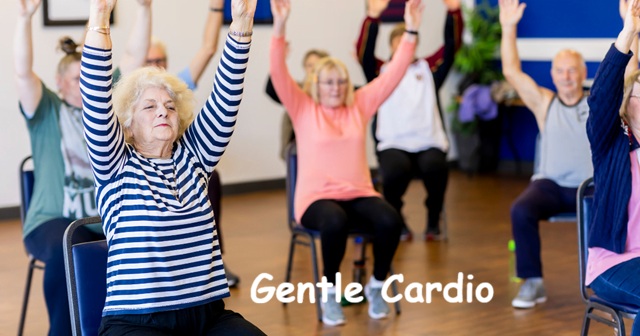
Chair Cardio
For those with joint concerns or limited mobility, seated cardio workouts are a safe, effective way to keep your heart strong.
How Much Cardio Do You Need?
The general recommendation, as mentioned above in the walking section, is 150 minutes per week of moderate-intensity activity, about 20–30 minutes a day, five days a week. You can break that into smaller, more manageable sessions.
If you can talk but not sing while moving, you’re in a healthy cardio zone. That’s a simple test to determine if you’re working at the right intensity without overexerting yourself.
Making Cardio a Natural Part of Your Day
Short “movement snacks” of 10 minutes here and there can add up. Take a walk after meals, dance while cleaning, or stretch
between tasks. When movement becomes part of your rhythm, it stops feeling like a chore.
Tracking your steps or minutes can also help you stay motivated. Whether you use a smartwatch, an inexpensive step counter, a phone app, or a simple notebook, seeing your progress builds momentum and reinforces the habit of daily movement.
Cardio doesn’t have to mean sweat-drenched workouts. It’s joyful, rhythmic, and integrated into your day. Think of it as a gift to your future self, keeping your heart strong, your mind sharp, and your energy flowing.
Reflection:
How does your body feel after a short walk or light dance break? Notice the energy shift. What kind of movement feels joyful enough that you’d want to do it again tomorrow?
Please share your experiences in the comment section below
about CARDIO exercise
and add any tips you have found beneficial
to your Healthy Habits