Once you’ve built a foundation of strength, it’s time to keep your heart and lungs just as resilient. Cardio habits focus on sustainable movement: walking, cycling, swimming, and dancing that keep your energy flowing and your spirits high without pushing your body to exhaustion.
Cardiovascular exercise is crucial for maintaining long-term health, particularly as you age. However, the good news is that it doesn’t have to be intense or exhausting to be effective.
Gentle cardio improves heart health, boosts circulation, supports brain function, and regulates blood pressure and cholesterol. It also plays a major role in maintaining energy levels and emotional well-being.
Why Cardio Changes With Age
As you age, your body undergoes changes that affect the ways you approach cardio. Recovery time increases, and your joints often become more sensitive to high-impact activity. That’s why gentler forms of cardio like walking, swimming, pool walking, and cycling tend to be better choices. They’re sustainable, joint-friendly, and every bit as beneficial for your overall health.
The Key Benefits of Low-Impact Cardio
Reduces Inflammation
Low-intensity cardio lowers inflammation throughout the body. When you engage in movement that elevates your heart rate without straining your joints, you support your immune system, improve circulation, and feel better on a day-to-day basis.
Improves Oxygen Flow
Good circulation becomes increasingly important as you age. Regular cardio ensures that your brain and body receive the oxygen they need to function optimally, helping to preserve cognitive health, focus, and overall vitality.
Supports Weight & Blood Sugar Balance
You don’t need the same intensity you once did to stay healthy. Regular movement manages weight and improves insulin sensitivity, reducing the risk of diabetes and supporting long-term metabolic health.
Protects Your Heart
Perhaps the most powerful benefit: low-impact cardio strengthens your heart and reduces the risk of stroke and heart disease. A consistent, moderate routine is one of the best investments you can make for longevity.
Great Low-Impact Cardio Options
Brisk Walking
Indoors or outdoors, walking remains one of the simplest, safest, and most effective ways to improve cardiovascular health. Seniors should aim for at least 150 minutes of moderate aerobic activity weekly (like brisk walking 30 mins, 5 days/week) or around 6,000-8,000 steps daily, though the key is consistency and starting where you are, with even small increases (like 500 steps) offering significant heart benefits. Always consult a doctor first to set personalized goals
Swimming or Water Aerobics
The buoyancy of water relieves pressure on joints while offering a full-body workout that enhances strength and flexibility. Also a pool walking workout uses water resistance for a low-impact, full-body exercise, engaging your core, legs, and arms as you walk with proper form (straight back, upright posture, heel-to-toe) in waist-deep water, varying intensity with speed, arm swings (using resistance gloves), or high knees, and progressing to deeper water or backward/sideways movement for increased challenge. Again, always consult a doctor first to set personalized goals
Cycling
Whether on a recumbent or stationary bike, cycling is gentle on the knees and adaptable to any fitness level. Cycling follows the same basic principles as all forms of exercise. Working against an opposing force builds muscle, so to increase your strength capacity, you need to add resistance. Pedaling with very low resistance may feel like you’re working hard because you’re moving so fast, but it will do little to strengthen and tone your legs. On the flipside, you don’t want to set the resistance so high that you can barely move the pedals.
Rebounding
A mini trampoline workout adds fun variety to your routine. It’s light on the joints but powerful for circulation and endurance.
Dancing or Movement Videos
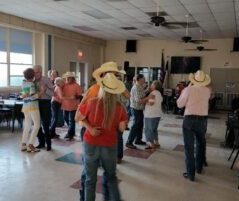
Dancing at Mineral Wells Senior Center
Enjoyment is key to consistency. Dancing with friends or following movement videos makes staying active feel effortless. One of the reasons Mineral Wells Senior Centerconducts dances and dance instruction several times a month is not only for the socialization but also the physical benefit
Chair Cardio
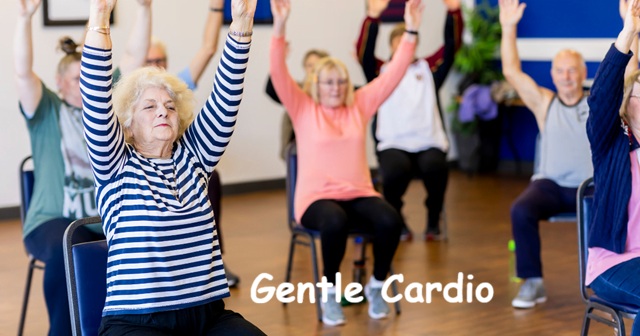
For those with joint concerns or limited mobility, seated cardio workouts are a safe, effective way to keep your heart strong.
How Much Cardio Do You Need?
The general recommendation, as mentioned above in the walking section, is 150 minutes per week of moderate-intensity activity, about 20–30 minutes a day, five days a week. You can break that into smaller, more manageable sessions.
If you can talk but not sing while moving, you’re in a healthy cardio zone. That’s a simple test to determine if you’re working at the right intensity without overexerting yourself.
Making Cardio a Natural Part of Your Day
Short “movement snacks” of 10 minutes here and there can add up. Take a walk after meals, dance while cleaning, or stretch
between tasks. When movement becomes part of your rhythm, it stops feeling like a chore.
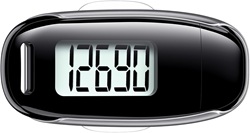
Tracking your steps or minutes can also help you stay motivated. Whether you use a smartwatch, an inexpensive step counter, a phone app, or a simple notebook, seeing your progress builds momentum and reinforces the habit of daily movement.
Cardio doesn’t have to mean sweat-drenched workouts. It’s joyful, rhythmic, and integrated into your day. Think of it as a gift to your future self, keeping your heart strong, your mind sharp, and your energy flowing.
Reflection:
How does your body feel after a short walk or light dance break? Notice the energy shift. What kind of movement feels joyful enough that you’d want to do it again tomorrow?
Please share your experiences in the comment section below
about CARDIO exercise
and add any tips you have found beneficial
to your Healthy Habits
Healthy Habits 1: Start with Strength, which is the Foundation of Movement
Strength is the root of vitality. It’s the quiet power that lets you stay independent, capable, and confident as the years unfold. In this first Healthy Habits, you’ll explore how building and maintaining muscle protects every system of your body, from balance and metabolism to brain health.
If there’s one thing that predicts long-term independence and vitality, it’s strength. Muscle mass lets you live well longer.
After age 30, you naturally lose muscle unless you intentionally maintain or build it. This process, called sarcopenia, accelerates with age and leads to weakness, instability, and fatigue. But it doesn’t have to. Strength is one of the most trainable aspects of your health, even in your 70s, 80s, and beyond.
Why Strength Matters After 45
Strength is more than just power. It’s a vital form of protection, especially as you age. As you approach and pass the age of 45, maintaining strength becomes increasingly important for your overall well-being. One of the key benefits of strength is its role in supporting your joints and posture. A strong body stabilizes your joints, reducing the risk of wear and tear that leads to discomfort and injury. This support is crucial for maintaining mobility and independence as you age.
Strength Prevents Falls and Injury
Another significant advantage of strength is its ability to prevent falls and injuries. As you grow older, the risk of falling increases, which leads to serious injuries. Strength training improves your balance and coordination, making it less likely that you will lose your footing or be unable to catch yourself if you do. This not only keeps you safer but also boosts your confidence in performing daily activities.
Strength Regulates Blood Sugar and Metabolism
Strength plays a pivotal role in regulating your blood sugar and metabolism. Muscle is an active tissue that constantly burns energy, even at rest. This metabolic activity regulates blood sugar levels, reducing the risk of conditions like diabetes. A stable metabolism is also essential for maintaining a healthy weight, which in turn supports your overall health and vitality.
Strength Improves Quality of Life
Strength is not just about physical prowess. It’s about the quality of your life. It allows you to carry out everyday tasks with ease, whether it’s lifting groceries, climbing stairs, or playing with your grandchildren. These activities, while simple, become more challenging as you age, and maintaining strength ensures that you can continue to enjoy them without limitations.
Strength Balance Your Hormones
Beyond the physical benefits, muscles also play a crucial role in hormone balance. This balance is vital for your overall well-being and impacts everything from energy levels to mood. Additionally, research shows that muscle health is linked to better brain function, suggesting that staying strong supports your cognitive health as you age.
Strength is a cornerstone of healthy aging. It provides protection, enhances your physical capabilities, supports metabolic health, and contributes to your overall well-being. As you move through life, prioritizing strength is not just about looking good; it’s about feeling good, living well, and enjoying every moment to the fullest.
What Counts as Strength-Building?
When it comes to building strength, you don’t need to lift heavy weights or join a gym. What really matters is resistance, anything that makes your muscles work harder than usual, including a variety of activities that you might already be doing or can easily incorporate into your daily life.
Simple Resistance Exercise
For instance, bodyweight movements like squats, wall push-ups, and lunges are effective ways to start. You can also use resistance bands, which are portable and versatile. If you prefer, you can use light hand weights or even household items, such as water bottles or cans of food. Another option is chair-based or low-impact strength routines, which are gentle on your joints. Even functional tasks, such as gardening, lifting laundry, or climbing stairs, can contribute to building strength.
The key to effective strength training is progressive challenges by gradually increasing the intensity or the number of repetitions over time to maintain or build strength. By consistently challenging your muscles, you’ll see improvements in your overall strength and fitness.
Building a sustainable routine is all about starting small and being consistent. Aim for two to three sessions per week of full-body strength training. Even just 10 to 20 minutes per session can make a noticeable difference, especially when you’re just beginning. Focus on consistency over intensity, ensuring you perform each exercise with a full range of motion. Remember to take rest days between sessions to allow your muscles to recover and grow stronger.
Proper form is crucial to prevent injury, so take the time to learn and practice the correct techniques. Make strength training a part of your lifestyle rather than a chore. You can pair it with music, do it with a friend, or set up a routine while listening to your favorite podcast. By making it enjoyable, you’re more likely to stick with it and reap the long-term benefits of a stronger, healthier you.
The Healthy Habit of building Strength is your foundation. It’s what lets you move with confidence, carry yourself with dignity, and stay active doing what you love. Building strength doesn’t require becoming a bodybuilder. You just need to stay capable of living the life you want to live.
Try THIS Today:
Choose one strength movement, such as squats, wall push-ups, or lifting grocery bags, and perform it with full attention to form. Notice how your body feels when you finish. Strength begins with showing up.
This Video Series may be VERY Helpful
Share your experiences in Building Strength
in these Golden Years
Comment below
Steve was sick. He had body aches, a runny nose, and a cough along with a 102-degree fever, chills, and extreme weakness. He went to his doctor and was diagnosed with Influenza A. Steve didn’t believe in flu shots, so he never took one. “Oh, the flu is just an inconvenience. I will be back to normal in a week.” A week later, he landed in the ICU with a heart attack.
Is it related? Yes! The flu that Steve had, Influenza A, affects more than the respiratory system. It triggers a powerful inflammatory response that sends the immune system into overdrive. The heart rate is elevated, increasing the energy demands, and blood platelets are activated, increasing blood clot formation. Fever worsens the energy demands, and dehydration adds further strain, increasing the risk of a cardiac event.
Seasonal influenza hits Senior Citizens every year, and most of us blow it off. It is not in the top 10 causes of death in the US, but it is one of the most important factors that can contribute to other conditions, such as pneumonia, ear infections, sinus infections, and worsening of asthma, diabetes, and congestive heart failure. Data from the American Heart Association indicates that people are four times more likely to have a heart attack and five times more likely to have a stroke in the month after a confirmed influenza infection. It is important to monitor cardiovascular health during flu season.
Senior Citizens are significantly more susceptible to heart attacks after an Influenza A infection, with studies showing a drastically increased risk (up to six times higher) in the days and weeks following the flu, even in those without prior heart issues, due to the virus triggering intense inflammation and stress on the cardiovascular system. Older adults account for the majority of severe flu complications, and the risk of cardiac events, strokes, and death remains elevated for months post-infection, making annual vaccination crucial for this age group
It is always better to prevent than to treat.
Influenza vaccination is recommended for most people aged 6 months and older. It is especially important for individuals with existing heart conditions. Studies have shown that flu vaccinations can reduce the risk of heart attacks and other serious cardiovascular events among those with heart disease.
December through March is the peak flu season! It is not too late to get your flu shot. It takes about 2 weeks after vaccination for antibodies to develop and provide protection. You may still get sick with the flu, but the vaccine reduces the severity and complications of the illness.
And remember, flu shots are generally free for senior citizens with Medicare covered 100% under Medicare Part B or Medicare Advantage (Part C) plans, as long as you see a provider who accepts Medicare and is in-network for Medicare Advantage