
Habit 9: Stress Management for Cellular Health
Stress may start in the mind, but it leaves fingerprints throughout the body. Here, you’ll discover how chronic tension accelerates aging and learn simple, restorative ways to calm your system, protect your cells, and reclaim your inner peace.
Stress doesn’t just affect your mood, but it also impacts your biology. Chronic stress accelerates cellular aging, increases inflammation, and interferes with hormone function, digestion, immunity, and sleep. Left unchecked, it wears down your resilience from the inside out.
However, here’s the opportunity: how you manage stress in midlife can significantly impact your entire health trajectory moving forward.
The Inflammation-Stress Connection
When your body perceives a threat physical, emotional, or environmental it activates the fight-or-flight response. This releases cortisol and adrenaline, which are helpful in emergencies but harmful when activated constantly.
Chronic stress can:
- Suppress immune function.
- Disrupt digestion and nutrient absorption.
- Raise blood pressure and blood sugar.
- Trigger or worsen autoimmune and inflammatory conditions.
- Accelerate the shortening of telomeres (a marker of cellular aging)
Reducing stress requires slowing cellular wear and tear.
Gentle Biohacks for Resilience
You don’t need extreme interventions to shift your body out of stress mode. Small, daily practices make a measurable difference.
- Breathwork: Slow, diaphragmatic breathing activates your parasympathetic nervous system.
- Sunlight: Morning exposure supports circadian rhythm and boosts serotonin
- Grounding: Walking barefoot on grass or soil can reduce inflammation markers
- Cold exposure: Brief cold showers or face splashes may improve mood and reduce stress hormones.
- Laughter: Triggers the release of feel-good neurotransmitters and relaxes muscles
Even five minutes of focused breathing or stepping outside can regulate your system.
Building a Calm-Centered Daily Rhythm
- Start your day without your phone, ground yourself before input.
- Schedule in “white space” between tasks
- Create a wind-down ritual at night.
- Limit multitasking and overstimulation.
- Practice gratitude journaling or reflection.
You can’t eliminate all stress. However, you can develop tools and rhythms that help you recover from it more quickly.
Stress is inevitable. But chronic stress is optional. By learning to regulate your nervous system and protect your inner calm, you’re not just managing your day; you’re preserving your long-term health at the deepest levels.
Try This Today:
Pause three times today for one minute of slow, steady breathing. Feel your shoulders drop. Feel your pulse settle. That’s your nervous system recalibrating in real time.
How have you been managing stress?
Share your experiences below
in the Comment Section

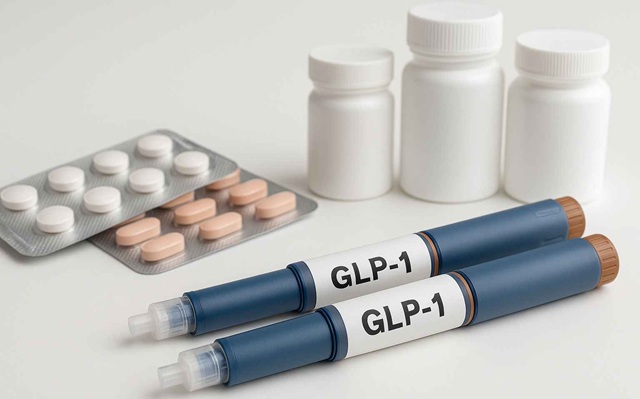
GLP-1 Receptor Agonists
Sally was feeling tired and sluggish. She made an appointment with her provider to discuss how she could improve her health. Her physical exam showed that her BMI was in the obese category, her Ha1c (3-month average blood sugar) was 8, which correlates to an average blood sugar of 183. This is in the diabetic range. Her blood pressure was elevated.
Sally had tried every diet known to mankind, so she and her provider decided to try a GLP-1. Sally felt defeated. She knew she could do this on her own. For the first few weeks, she felt bloated and nauseated with the new medication.
She followed up with her provider and was referred to a nutritionist and coach to understand what was happening and how to decrease the side effects.
Glucagon-like peptide 1 receptor agents (GLP-1 RAs) are being prescribed for a growing number of people for Type 2 diabetes, obesity, and associated conditions including cardiovascular disease, fatty liver disease, and obstructive sleep apnea. For many people, these meds are a lifeline.
Our body naturally makes the hormone GLP-1 when we eat, but sometimes we don’t
make enough. The GLP-1 Receptor agonists* are a synthetic analog of these natural
hormones.
We live in an obesogenic environment where we consume easy, ultra-processed foods with chemicals we can’t pronounce, added sugars, unhealthy fats, and sodium. We also have food noise, which is different from hunger. This is a persistent mental chatter about food that distracts, stresses, and influences our eating behaviors.
These two factors create an unhealthy relationship with food. The GLP-1 Ra medication quiets the food
noise. Your body says I feel full and don’t need to eat any more. We have more control.
The goal of these drugs is to promote health. They not only control blood sugar and
contribute to weight loss, they also help decrease blood pressure, decrease obstructive
Sleep apnea, remove fat from the liver, and decrease heart disease risk.
Sally’s provider educated Sally about the benefits and the side effects of GLP-1 medications.
There are common side effects. The most common are stomach issues like nausea, vomiting,
diarrhea, and constipation. Some people have also reported pancreatitis and gallbladder disease.
Because these medicines often lead to reduced calorie intake, some people may experience hair loss
, muscle loss, or decreased bone density. Some sources list depression and anxiety as a side
effect, but newer research shows GLP-1s may improve mental health and reduce anxiety and
depression.
GLP-1s are contraindicated in patients with medullary thyroid cancer or with a
family history of medullary thyroid cancer due to the potential for increased risk. More research
is being done.
Sally was referred to a dietitian and a coach to discuss the importance of nutrition and adopting a
healthy lifestyle in lowering the risks of side effects. She learned:
1. Stop eating when you feel full. It is better to eat small meals frequently.
2. A Mediterranean-style diet is balanced and will help you get adequate nutrients.
3. Minimize or avoid ultra-processed foods. The added sugars and unhealthy fats can
worsen the side effects.
4. Aim for 80 to 120 grams of protein per day to preserve muscle and bone mass. That
would be 30 grams per meal x 4 meals per day.
5. Avoid fatty foods to decrease GI side effects.
6. Use a tracker to ensure you are getting the micro- and macronutrients you need.
7. Drink enough water to stay hydrated. Your urine should be a pale yellow.
8. Aerobic and resistance exercise help preserve muscle mass and bone. Aim for 150
minutes of moderate aerobic activity per week and include about 20 minutes of resistance
exercises 2 times a week.
9. Aim for 7 to 9 hours of good sleep per night. If you have sleep apnea, see your provider.
10. Lower stress. Good nutrition, exercise, staying in the present moment, and doing calming
activities each day can help.
11. Limit alcohol to no more than 1 serving for women and 2 servings for men daily.
Sally is doing well with changing her lifestyle and improving her nutrition. Her GI side effects
have resolved, and her weight is coming off. She was cautioned that should she discontinue the
GLP-1, the hunger and the food noise would come back. Most regain the weight. Continuing
these tips may minimize the weight gain.
* Agonists: An agonist is a substance (like a drug or hormone) that binds to a cell receptor and activates it to trigger a physiological response. It essentially mimics the action of a naturally occurring substance. In anatomy, an agonist (or “prime mover”) refers to a muscle that contracts to produce a specific movement.